Look A Glutton and a Drunkard! 2/8
Orlando. Pulse. Homophobia. Hate. John the Baptist. Jesus. What do we say now?

We seek and shelter spiritual refugees, rally spiritual health for all who come, and fortify every tender soul with the strength to follow Jesus into a life of world-changing service.
OUR MISSIONAL PRIORITIES:
1. We do justice for LGBTQ+ people, and support the people who love them.
2. We do kindness around mental illness and mental health and celebrate neurodiversity.
3. We do beauty for our God-Who-Is-Beautiful.
4. We do real relationship, no bullshit, ever.
5. We do whatever it takes to share this good news with the world God still loves.
Trying to find us IRL?
Mail here: P.O. Box 668, Kennedale, TX 76060
Worship here: 5 pm CT Sundays; 5860 I-20 service road, Fort Worth 76119
Trying to find our Sunday worship livestream?
galileochurch.org/livestream
Orlando. Pulse. Homophobia. Hate. John the Baptist. Jesus. What do we say now?


Explaining intersectionality this way: "It’s like if the centurion and the widow of Nain had a baby, that baby would be us."

"A bruised reed, we will not break; a dimly burning wick, we will not quench." It must be true; that's what it says on our t-shirt.
On this night we made our Covenant of Co-Conspiracy -- that's how you say "yes" to prioritizing the mission of Galileo Church for one year. Read the covenant here.


Meinrad Craighead, "Song of Solomon"
Nature lovers, this sermon is (not) for you. Beauty is everywhere; God made sure of that. Church helps us know where to look.
(The Genesis 2 reading is recorded here; but much of the sermon's imagery comes from the Song of Solomon. Enjoy.)

"Do you have anything to say to me before I leave?" -- Lancelot Lamar in Walker Percy's Lancelot. Or was it Beyoncé in Lemonade? Or is the Samaritan woman at that well with Jesus? The Trinity Brazos Area of the Southwest Region of the Christian Church (Disciples of Christ) pondered it hard at our annual assembly.

For the first part of the sermon, Bey's "Hold Up" video played silently on the screen behind the preacher. It was... umm... unsettling. In the best possible way.
You don't have to have read Lancelot or seen Lemonade for this to make sense. But you probably should anyway. Just sayin'.

Did Jesus love his mother? It's up for debate, at least the way we think about "love." But he loved his family-of-choice, and so do we. At our best, (baptismal) water is thicker than blood. Welcome to your family, church.


The Bible is not normal. The Bible is not simple. The Bible is not even for you, individually. The Bible is weird, complex, and for us, all together. The church is a community of interpretation. Get in here and let's read it together.
Church is the place where we cultivate hope. It's where we lick the batter from the bowl before the cake is baked. Jesus proclaimed the reign of God -- "Despite all appearances to the contrary, God is in charge." That's what we're saying, too.


A sermon... about a sermon... mind blown. Also, a sermon in which the preacher maintains a sarcastic voice from the beginning to the very end. We don't know if it's a good idea, but it happened. The preacher explains, "Sometimes the text is too hard for me to preach with it. I sort of preach against it, but with the skeptical people of God, so the scripture can be heard, so Jesus gets his say." Does it work for you?

Rev. Nicole McRaney with Rev. Coretha Loughridge of the Southwest Region of the Christian Church (Disciples of Christ).
Our first ordination! Nicole McRaney answered God's call to ministry and we got to say "yes" to that. And she asked for her favorite text, the one about spinning and weaving, so we made that work like this.

Progressive Muslims and progressive Christians, in some important ways, have more in common than progressives in either faith have with their conservative counterparts. Are you surprised? This is one of our favorite conversations ever. Hella good. Just hella good. "You shall know them by their fruits."
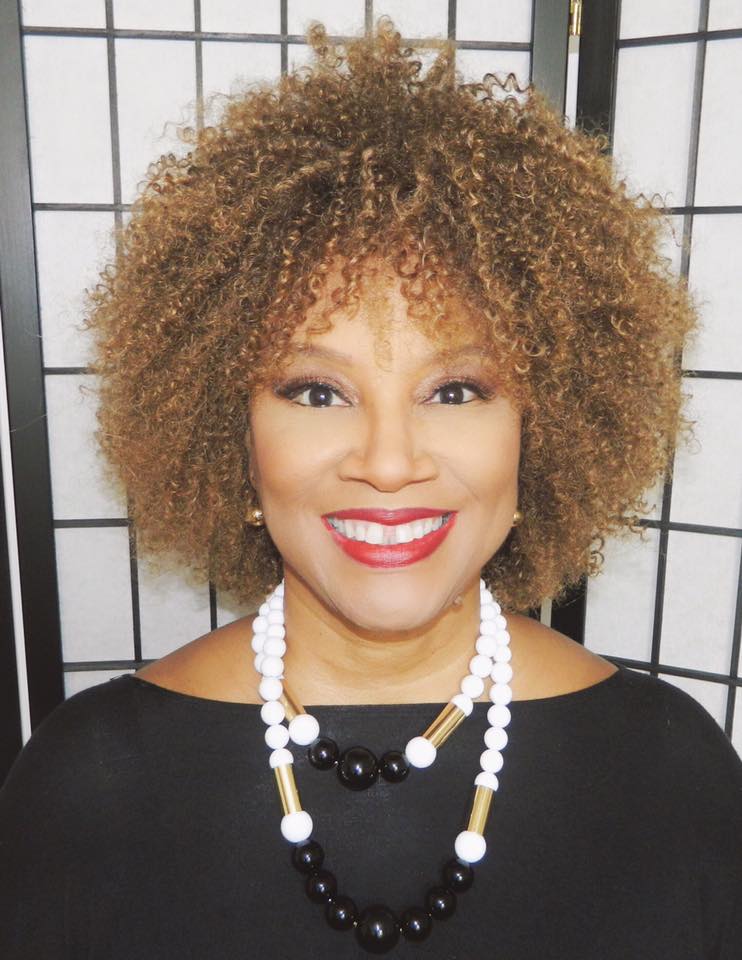
One of Katie's dearest friends, Rev. Dr. Irie Lynne Session, produces a podcast about the topics that mean the most to her life of discipleship. Recently she called Katie for a conversation called "Politics and Possibilities: Interracial Friendships Between Black and White Women." Not the easiest thing in the world to talk about, right?

In February 2016 our Lead Evangelist was invited to talk about an aspect of Galileo that might be surprising to traditional church folks (like herself): how a "homeless" church can become the safest place on earth.

"Church: What Is It Good For? (HUH!)" is our worship series for the season of Eastertide. We posit that "Spiritual, But Not Religious" could be translated, "Alone, But Not Together." And alone is not the best way to be, is it? What if the abundant life Jesus named in John 10 is the promise of fullness of relationship in the beloved community?
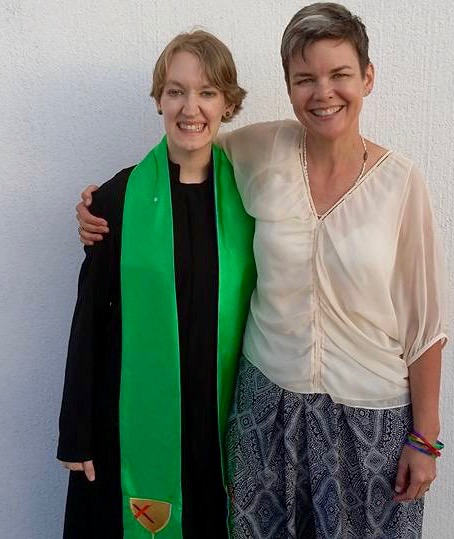
And on this date, we ordained Nicole McRaney to Christian ministry. Such a beautiful day. Thanks, Nicole, for letting us be part of it.

When the tsunami comes, is it fight, flight, or freeze? Or maybe you just run into it headlong, damn the consequences, because some things are worth running for. Hike up your skirts. Resurrection is worth running for. Luke 24.

"Right-sizing" is one of the hardest things to do. We simultaneously think ourselves too big and too small. Like the great Anne Lamott has said, "I am a piece of shit around which the whole world revolves." Amen, sister. Simon Peter said the same exact thing in Luke 5:1-11.
For Lent, we thought about the contemporary sins of our culture, our generation. This one is a little clumsy: the compulsion to form an opinion about everything, and publish it, quickly. Perhaps the antidote is genuine curiosity about our neighbors? Mr. Rogers seems to think so.

She doesn't look particularly wicked, does she?
Could our preoccupation with physical comfort be turned into something good for the world? Hm. We'll see. We read several scathing portions of Amos: 4:1-5, 6:1-7, 8:4-7. We also read a much nicer story in John 12:1-8.

On the second Sunday of our “Screwing Up, Getting Better” worship series, we confessed our “belief in salvation by technology.” Nobody actually believes that tech is the messiah, but we are awfully prone to coming up with technological semi-solutions that don't actually solve the problem they were intended to address, and which then become problems of their own.
For example, Greatest Generation folks wanted a sense of community and belonging, so they built church buildings, hoping to get that feeling from walls and floors. But instead they (and their descendants) got deferred maintenance, balloon notes, property committees, and arguments about the color of the carpet. The building was a technological “solution” to the problem of community formation.
In Exodus 14, the narration of the Israelites’ escape from Egypt through the Red Sea, the word “chariot” is used 16 times. The intense repetition clues us in that Pharaoh’s technology is getting the best of him. Indeed, it’s the chariot axles and wheels that get bogged down in the mud at the bottom of the Red Sea and cause the demise of the army. You can picture Pharaoh screaming at his troops, “Go, go, go, go!” because that’s what you do when you’ve got lots of tech – you use it, fast and hard, to get what you want. Until it’s drowning you.
By contrast, in the same story God is exhorting the Israelites to “Keep still, and watch.” God has no tech – only the elements of creation: fire and cloud, land and sea, dark and light. “Keep still and watch,” God says to the pursued people of God, while Pharaoh screams “GO!”
We’re weirdly comfortable, though, in Pharaoh’s economy. It’s much harder to “Keep still and watch.” We have lots of technological “help” in our lives that requires our attention, our energy, our “Go, go, go!” We mediate even our relationships with people and with God through layers and layers of tech – not only through our phones, but there it is.
We suggest that Sabbath observance, Commandment Numero Quatro in the Big Ten from Exodus 20, is God’s insistence that we “Keep still and watch,” trusting that God and God’s creation will give us everything we need. Sabbath practice is about disengaging from all the technology and work and “Go!” that drives us all the other days of the week.
So on Sunday last, we turned out all the lights, checked our phones at the door, turned off the projector and screen, ditched the microphones, and relied on our voices alone – along with the simplicity of bread and cup – to create our worship of God. We kept still. We watched. We imposed a little Sabbath disengagement, just for a little while. Just to see how it felt.
It felt good.
And there was no recording, because #notech.

This is the Coupland book that first named our first sin.
In a worship series for Lent, we're addressing several new (but really old) ways that human beings show how f***ed up we can be. In this one we're talking about our "willful neglect of reflection," a sin named in 199x by Douglas Coupland as a particular failing of Gen Xers. But Moses warned about it first in Deuteronomy 6.