
Come on up to the house
January 11, 2025 - February 15, 2026
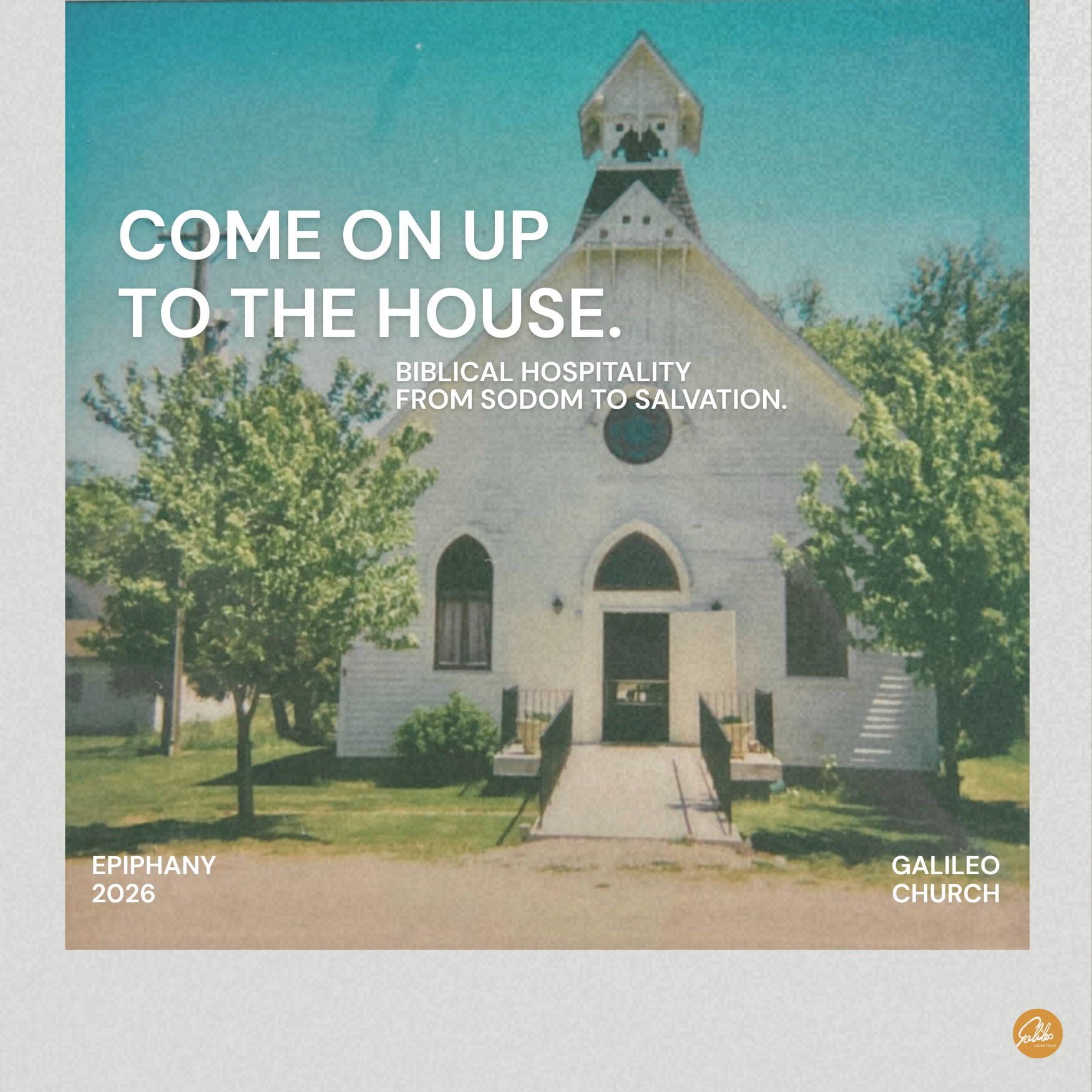
Epiphany is a season of revelation: God reveals God’s hopes for all creation, and for the human co-conspirators with God’s dream. In what seems like a particularly unwelcoming season in our public and political life, we’ll explore the ethic of hospitality in the Bible, including God’s hospitality to us and our respondent hospitality to each other and everybody else.
Sodom, Gomorrah, and the ancient Near Eastern ethic of hospitality. The story of Sodom-n- Gomorrah’s destruction deserves theological rehabilitation, so that the intra-biblical witness to those cities’ sin can be heard. Ezekiel 16:49 and Jesus’s sending of the apostles in Matthew 10 both point to Sodom’s inhospitality (a failure to welcome and care for traveling strangers) as the reason for God’s displeasure and punishment. Here we learn that God prioritizes our care for the stranger as the natural (God-given) way of human being.
Aliens Among Us. The language of “aliens” recurs many, many times through the Torah – compiled and written during the time of Israel’s exile to Babylon, many generations after the escape from Egypt. While the imperially conquered Judaism of Jesus’s day tended to keep Jewish identity front and center (so that Jesus himself never once ate with a Gentile!), there is a strong minority report in the text about God’s care and concern for non-Israelite persons. What does this mean for our own reception of non-citizen immigrants? How does the contemporary church “love the alien as ourselves”?
I’m Gonna Sit at the Welcome Table. We use many metaphors for God, but what about God as Dinner Party Host Extraordinaire? Jesus returns to this metaphor in his parables: God prepares a table, a banquet, a party; guests are either ready or not to join the celebration.
Welcoming Jesus. Jesus depended on the hospitality of others throughout his ministry – and really, throughout his life, from the Bethlehem barn to the borrowed tomb. The Bethany sisters were two of his closest friends, and they learned how to welcome him well. Can we extrapolate better and worse ways to welcome Jesus into our lives, perhaps by busying ourselves less, competing for his affection less, and quieting ourselves to listen more?
I Was a Stranger, and You Welcomed Me. The church has long understood itself as an organization that provides basic necessities like food and clothing to those “less fortunate.” Does the church likewise have an obligation to provide accompaniment and community to those who are lonely? What if that is the gospel for our disconnected, disconsolate age?
“No More a Stranger or a Guest, But Like a Child at Home.” God’s cosmic plan of salvation can be described as “reconciliation” – the putting back together that which has been separated – people from people, people from God, people from the earth – all is re-tethered, interdependent, in the household of God.