G-Kids, G-YOUth, and Pedagogy for Christian Discipleship
Double-click to edit...
Galileo Children & Youth Ministry Pedagogy
Rev. John Bowers came on board Galileo Church’s pastoral staff in March 2026, but he’s been Galileo-adjacent for our whole life together. Enjoy John’s thoughts about what we’ve called him here to do!
I see Galileo’s children and youth ministry as rooted in the belief that young people are already full participants in this community, in meaning-making, and in spiritual exploration. Our role is not to impose our certainty about matters of faith, but to create spaces where spiritual curiosity, belonging, compassion, and reflection can flourish.
That is why I seek to prioritize belonging rather than belief. Young people are not treated as projects for indoctrination, but as whole people worthy of dignity, agency, and care, exactly as they are. Questions, doubts, wonder, and imagination are welcomed as sacred parts of spiritual formation.
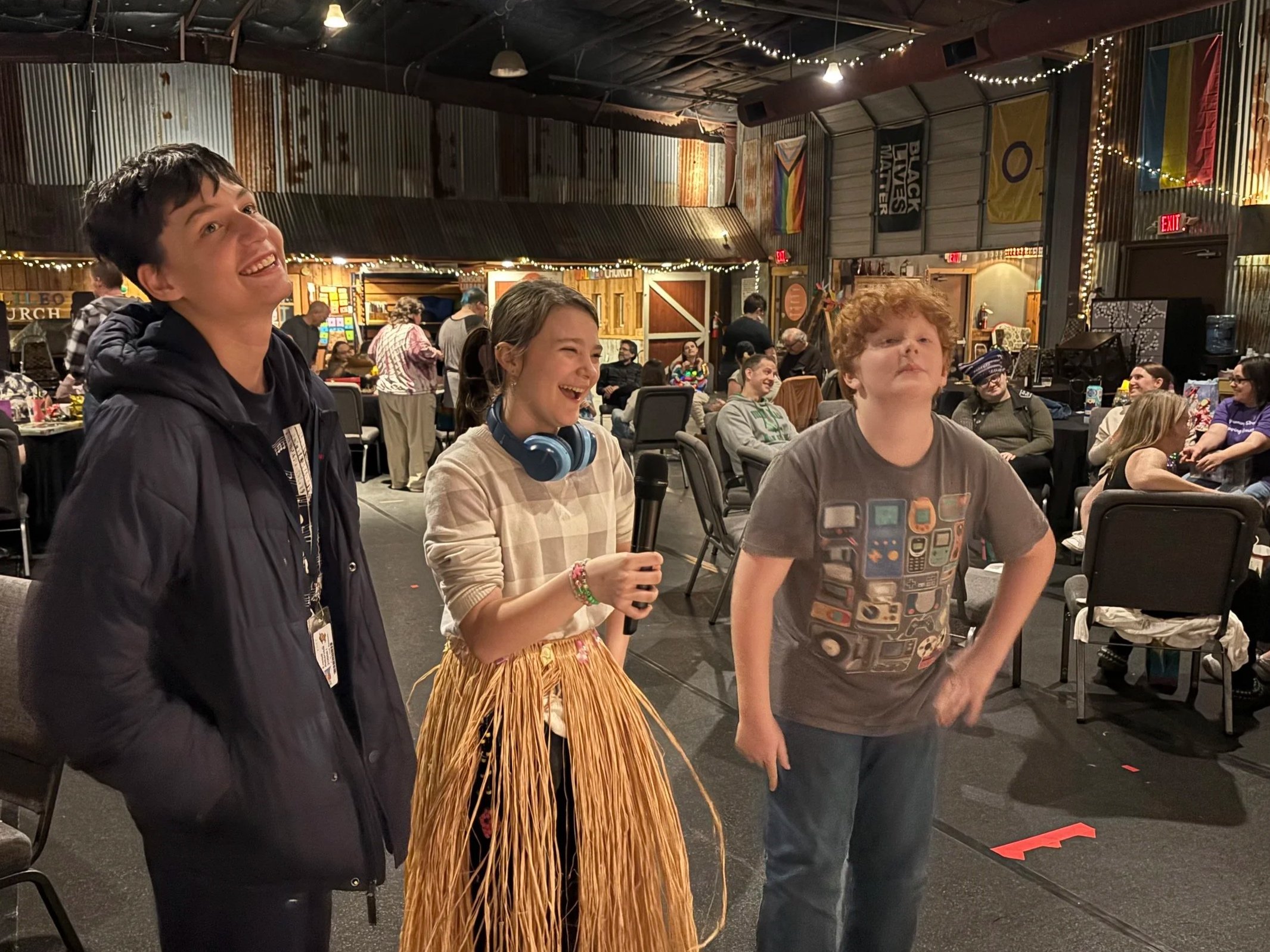
I also see Galileo’s pedagogy as experiential rather than purely instructional. Christian formation happens through participation: storytelling, shared rituals, art, games, dialogue, service, creativity, activism, and communal practices of care. I affirm that meaning is discovered collaboratively through lived experience and reflection rather than simply handed down as fixed set of answers.
I approach Biblical stories as wisdom literature that helps humanity wrestle with enduring questions of existence, justice, identity, suffering, liberation, and hope, in light of God’s presence and power. Scripture becomes a lens among many lenses for understanding human experience rather than a tool for enforcing dogma. Parables become existential mirrors, the Exodus story becomes liberation from oppression, Pentecost becomes radical belonging across difference, and the reign of God becomes a vision for compassionate, justice-oriented community.
With Galileo’s children, I will seek to emphasize embodied learning, emotional safety, imagination, and awe. With Galileo’s youth, I aim to cultivate spaces of honesty where difficult existential questions about identity, freedom, power, mortality, justice, and meaning can be explored.
Ultimately, I think Galileo’s pedagogy seeks to cultivate Christian kids who are spiritually awake, ethically grounded, emotionally healthy, and compassionately engaged; and who can participate in communities of healing and transformation for the world.